

Chalcedony – Gemstone of Calm, Harmony, and Inner Balance
-
blue Chalcedony Tumbled Stone - Gemstone - Jewelry Necklace Pendant - A Quality #7011 - seelensteinchen
Regular price €15,90 EURRegular price -
Green Chalcedony Tumbled Stone Gemstone Jewelry Pendant - A Quality #5264
Regular price €14,90 EURRegular price -
Edelsteinkarten Set – 37 Karten mit Informationen zu beliebten Edelsteinen
Regular price €12,90 EURRegular price -
Blue Chalcedony Sphere Pendant 18mm - Tumbled Stone Jewelry Pendant - Gemstone A Quality #5986
Regular price €34,90 EURRegular price -
Blue Chalcedony Tumbled Stone Gemstone Jewelry Chain Pendant - A Quality #5348 - seelensteinchen
Regular price €19,90 EURRegular price -
Blue Chalcedony Tumbled Stone Gemstone Jewelry Necklace Pendant - A Quality #0272
Regular price €21,90 EURRegular price -
Mussel Pearl Chakra - Gemstone Bracelet - Amethyst - Carnelian - Calcite 925 Sterling Silver - Jewelry #6398
Regular price €49,90 EURRegular price -
Edelsteinkarte Chalcedon DIN A7 – liebevoll gestaltete Informationskarte
Regular price €0,50 EURRegular price -
Traubenchalcedon Handschmeichler – Edelstein ca. 45 × 35 mm #8099
Regular price €34,90 EURRegular price -
Einhorn Gravur aus blauem Chalcedon – Edelstein-Figur #8086
Regular price €99,90 EURRegular price -
Blue Chalcedony Navette Tumbled Gemstone Pendant - A Quality #6313
Regular price €29,90 EURRegular price -

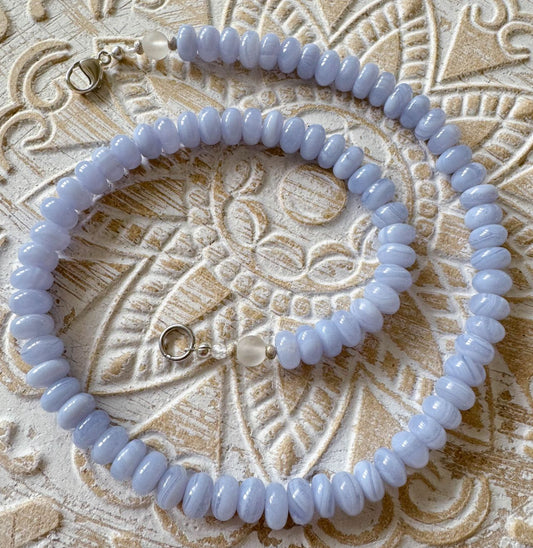
Blue Chalcedony Gemstone Jewelry Necklace - Collier - Gemstone Necklace - 925 Sterling Silver #7192
Regular price €139,90 EURRegular price -
Blue Chalcedony Cabochon Tumbled Stone Gemstone Jewelry Pendant - A Quality #7144
Regular price €17,90 EURRegular price -
Blue Chalcedony - Tumbled Stone Gemstone Jewelry Pendant - 925 Sterling Silver Eyelet - A Quality #6903
Regular price €29,90 EURRegular price -
Blue Chalcedony Tumbled Stone - Gemstone - Jewelry Necklace Pendant - A Quality #6882
Regular price €35,90 EURRegular price -
XL Blue Chalcedony Tumbled Stone Gemstone Jewelry Pendant - A Quality #6752
Regular price €59,90 EURRegular price -
Blue Chalcedony Donut - Pi Disc - Gemstone Pendant 40mm - A Quality #6359
Regular price €69,90 EURRegular price -
blue Chalcedony Donut - PI Disc - Gemstone Jewelry Necklace Pendant 30mm #6358 - seelensteinchen
Regular price €19,90 EURRegular price -
Blue Chalcedony Tumbled Stone Gemstone Jewelry Necklace Pendant - A Quality #5349 - seelensteinchen
Regular price €19,90 EURRegular price -
Chalcedony - Fluorite Gemstone Necklace - Gemstone Chain - 925 Silver Jewelry #4102
Regular price €119,90 EURRegular price






Das könnte Ihnen auch gefallen
-

Tumbled Stone Pendant – Gemstone Jewelry Made from Real Natural Stones
Tumbled Stone Pendants made from Real Gemstones – Drilled Pendants for Protection,...
-

Gemstone Cabochons with Silver Bail
Gemstone Cabochons with Silver Eyelet – Classic Jewelry with Natural Elegance Perfect...
-

Water Stones & Rough Stones – Gemstones for Water Energization
Making Gemstone Water - Energizing Water Carefully selected raw gemstones for safe...
-

Shungite Pyramids – Natural Stone Pyramids Made of Shungite
Natural pyramids made of black shungite – stylish and unique.In various sizes...
-

Gemstone Necklaces – Stylish Jewelry Made of Genuine Natural Stones
Gemstone Necklaces Made from Real Natural Stones stylish jewelry with meaning &...
-

Gemstone Bracelets – high-quality jewelry crafted from genuine gemstones
Natural gemstones combined into stylish and versatile bracelets Each piece is...
-

Gemstone Earrings 925 Silver – elegant jewelry with genuine gemstones
Natural gemstones combined with high-quality 925 sterling silver
-

Larimar Silver Pendants – Exclusive Designs & Genuine Gemstones
Elegant silver pendants with genuine Larimar – inspired by the sea and...


