

Apatite – Mineral, Gemstone & Jewelry Stone
-
Apatite Soapstone - Worry Stone - Laying Stone - Massage Stone - polished - AA Quality #6808 - seelensteinchen
Regular price €39,90 EURRegular price -
Apatite Gemstone - Tumbled Stone - Palm Stone - A Quality #5390 - seelensteinchen
Regular price €9,90 EURRegular price -
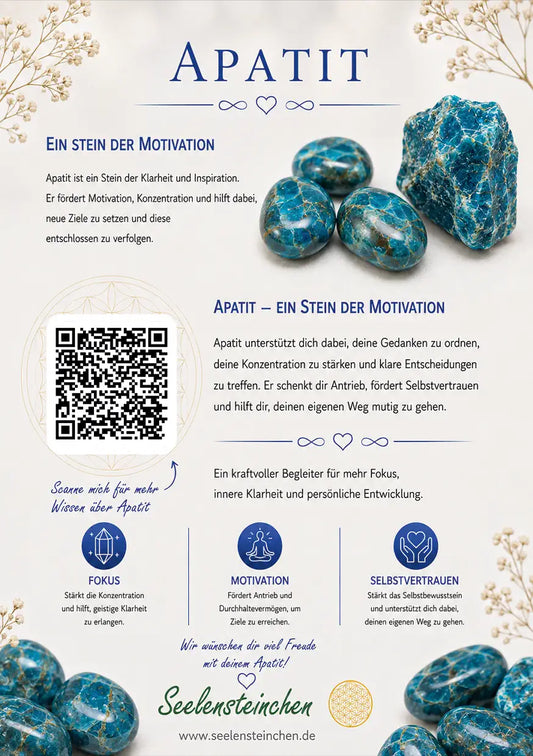
Edelsteinkarte Apatit DIN A7 – liebevoll gestaltete Informationskarte
Regular price €0,50 EURRegular price -
Apatit Kristall Edelstein Schmuck Ketten Anhänger - A Qualität - #8077
Regular price €29,90 EURRegular price -
Apatit Kristall Edelstein Schmuck Ketten Anhänger - A Qualität - #8076
Regular price €29,90 EURRegular price -
Apatit Kristall Edelstein Schmuck Ketten Anhänger - A Qualität - #8075
Regular price €29,90 EURRegular price -
Apatite Cabochon Pendant 38x16 mm – Gemstone with 925 Silver Eyelet - #8009 - seelensteinchen
Regular price €19,90 EURRegular price -
Apatite Cabochon Pendant 39x20 mm – Gemstone with 925 Silver Eyelet - #8008 - seelensteinchen
Regular price €19,90 EURRegular price -
Apatite Cabochon Pendant 39x20 mm - Gemstone with 925 Silver Eyelet - #8007 - seelensteinchen
Regular price €19,90 EURRegular price -
Apatite Cabochon Pendant 48x20 mm – Gemstone with 925 Silver Eyelet - #8006 - seelensteinchen
Regular price €29,90 EURRegular price -
Macrame Apatite Jewelry Tumbled Stone Necklace Pendant - Gemstone A Quality #7323
Regular price €29,90 EURRegular price -
Tree of Life Pendant with Apatite - Gemstone - Tree of Life - A Quality - Jewelry plated with 925 Silver #6731
Regular price €19,90 EURRegular price -
Apatite Small - Gemstone - Tumbled Stone - Palm Stone - A Quality #6063
Regular price From €15,90 EURRegular priceUnit price €318,00/kg -
Apatite Gemstone Bracelet - 925 Silver Jewelry - #5766
Regular price €59,90 EURRegular price -
Noble Apatite Tumbled Stone Gemstone Jewelry Pendant - A Quality - #5351
Regular price €19,90 EURRegular price -
Apatite Tumbled Stone Gemstone Jewelry Chain Pendant - A Quality - #5332
Regular price €17,90 EURRegular price -
Apatite Tumbled Stone Gemstone Jewelry Chain Pendant - A Quality - #5331
Regular price €19,90 EURRegular price -
Apatite Earrings - A Quality - 925 Sterling Silver Jewelry #5156
Regular price €49,90 EURRegular price -
Apatite Earrings - A Quality - 925 Sterling Silver Jewelry #5155
Regular price €49,90 EURRegular price -
Apatite - Rock Crystal - Gemstone Bracelet - 925 Silver Jewelry #4124
Regular price €49,90 EURRegular price




Das könnte Ihnen auch gefallen
-

Tumbled Stone Pendant – Gemstone Jewelry Made from Real Natural Stones
Tumbled Stone Pendants made from Real Gemstones – Drilled Pendants for Protection,...
-

Gemstone Cabochons with Silver Bail
Gemstone Cabochons with Silver Eyelet – Classic Jewelry with Natural Elegance Perfect...
-

Water Stones & Rough Stones – Gemstones for Water Energization
Making Gemstone Water - Energizing Water Carefully selected raw gemstones for safe...
-

Shungite Pyramids – Natural Stone Pyramids Made of Shungite
Natural pyramids made of black shungite – stylish and unique.In various sizes...
-

Gemstone Necklaces – Stylish Jewelry Made of Genuine Natural Stones
Gemstone Necklaces Made from Real Natural Stones stylish jewelry with meaning &...
-

Gemstone Bracelets – high-quality jewelry crafted from genuine gemstones
Natural gemstones combined into stylish and versatile bracelets Each piece is...
-

Gemstone Earrings 925 Silver – elegant jewelry with genuine gemstones
Natural gemstones combined with high-quality 925 sterling silver
-

Larimar Silver Pendants – Exclusive Designs & Genuine Gemstones
Elegant silver pendants with genuine Larimar – inspired by the sea and...


